"Mikoshi" Series
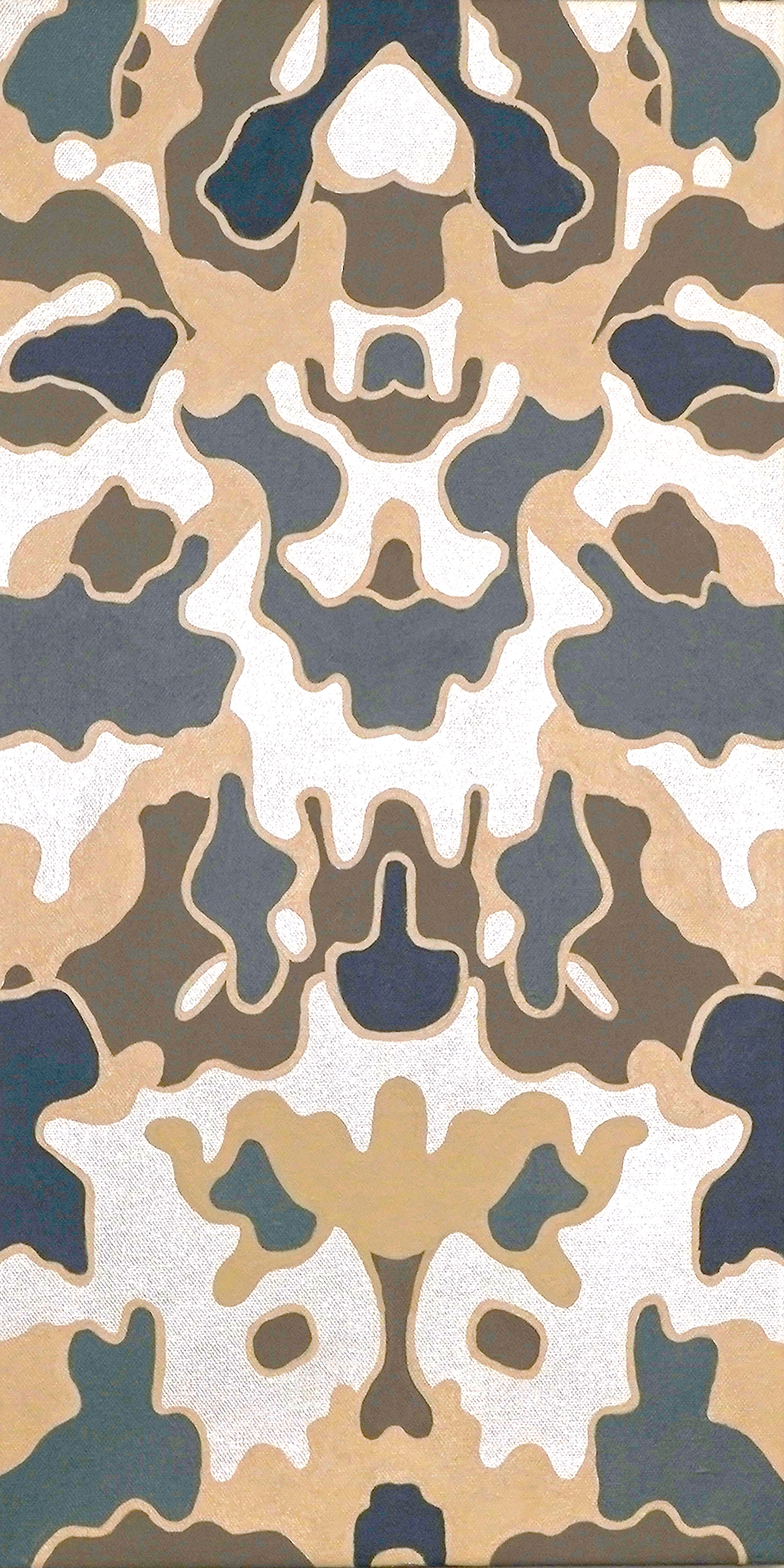
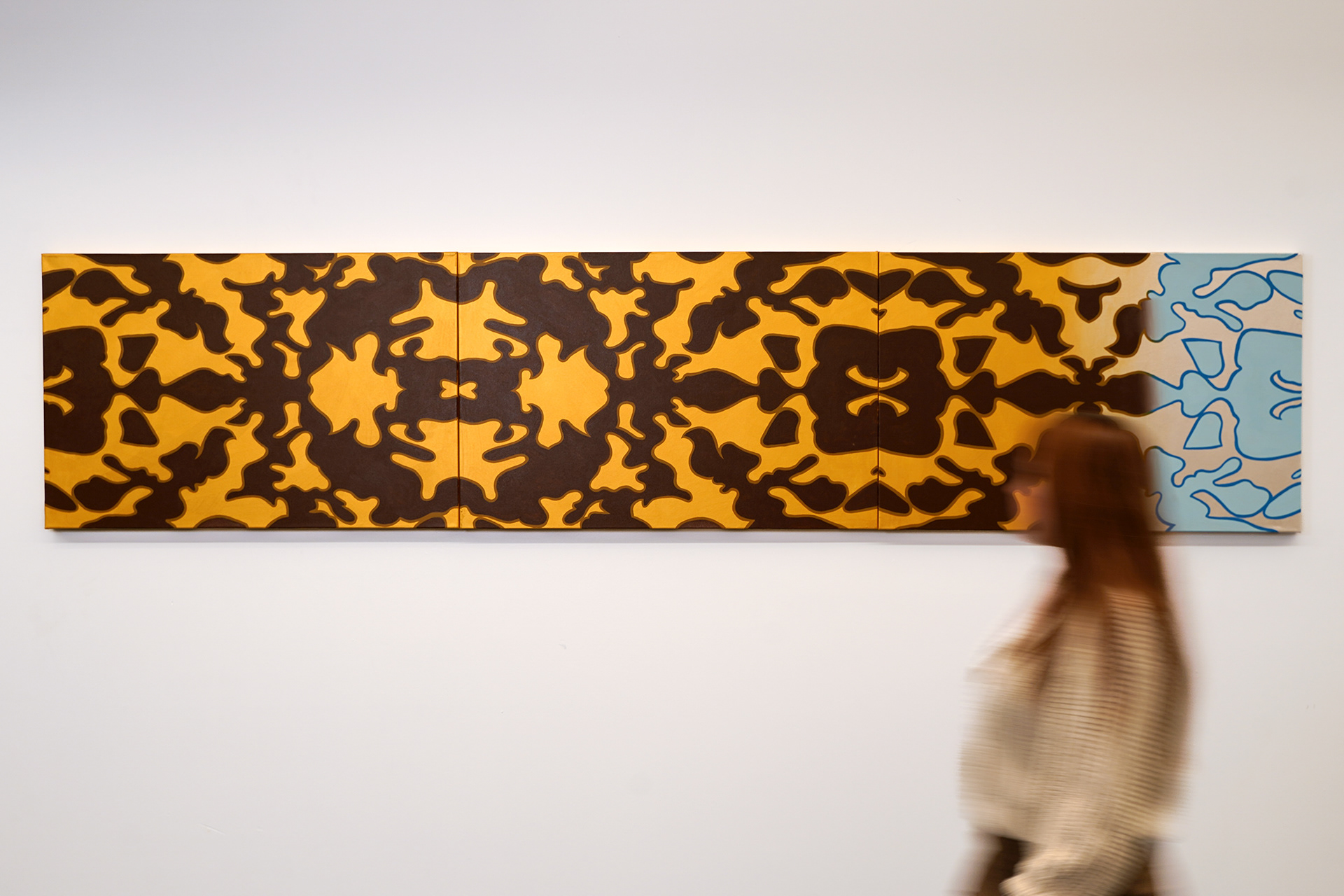
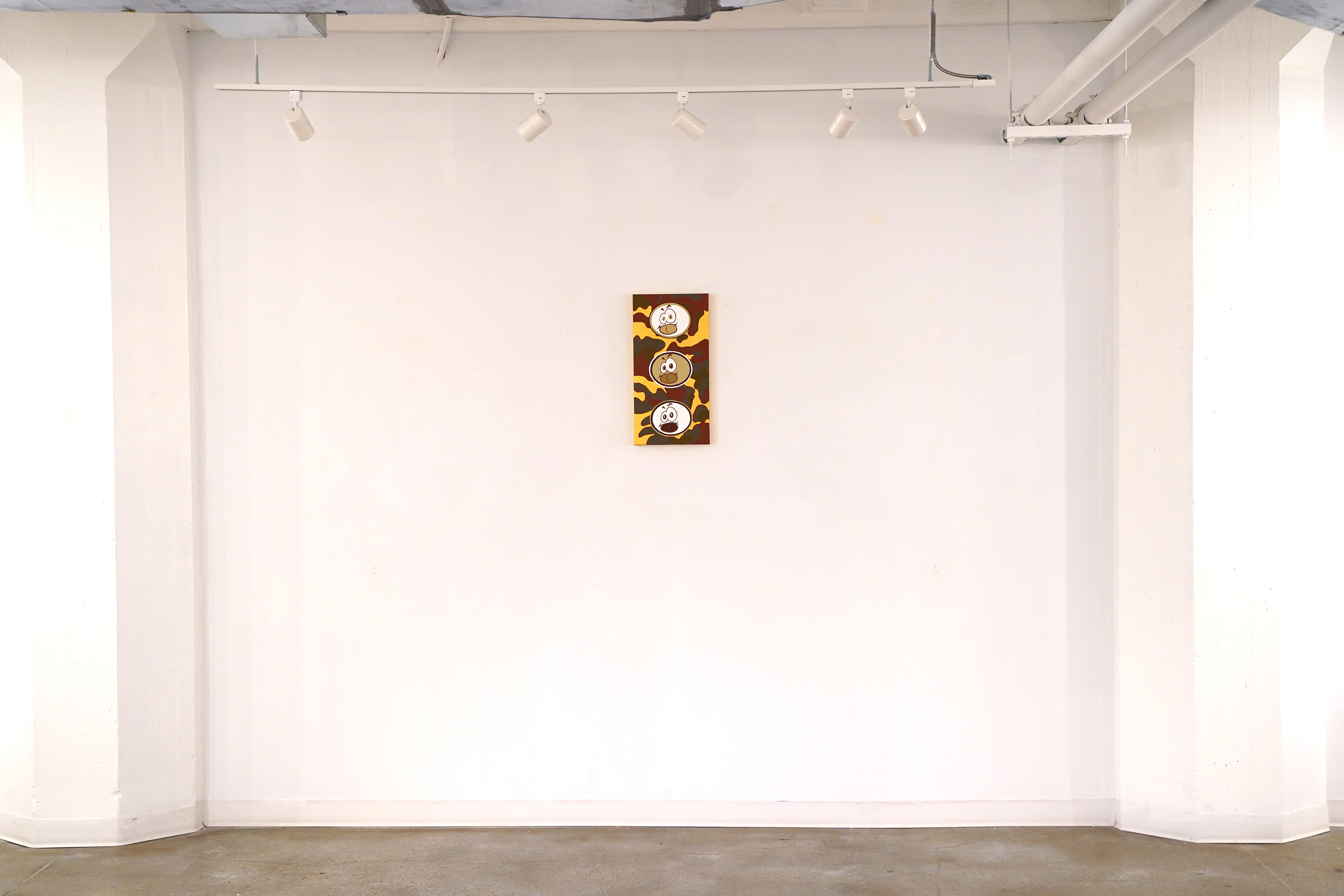
The Mikoshi series takes its name from the portable Shinto shrine—an object both sacred and communal, carried collectively yet owned by no one individual— and serves as an analysis on Western American and Eastern Asian (namely Japanese) cultures. The flat, simple shapes are borrowed from the flat, perspectiveless aesthetics of woodblock prints, as well as graphic advertisement and ancient, contoured imagery. The images are the result of repurposed, shifted, and changed visuals, stripped of their original cultural intentions, traded back and forth with an ever-muddied perspective. Camouflage, a decidedly lowbrow and chiefly American visual vernacular, is engaged to employ a cloud/fog-like mimesis, pushing the bounds of representation to the fringe. The series does not seek to disseminate understanding or sanctimony, allowing for a vacuum where sacred ideals can be burdened by irreverence and where hollow, shallow, and populist aesthetics can be revered. Ultimately, The Mikoshi series is a mediation and passive exploration on the themes of synergy, capitalism, corporatism, and colonialism, as well as the inevitable singularity where ideals are incapable of melding.